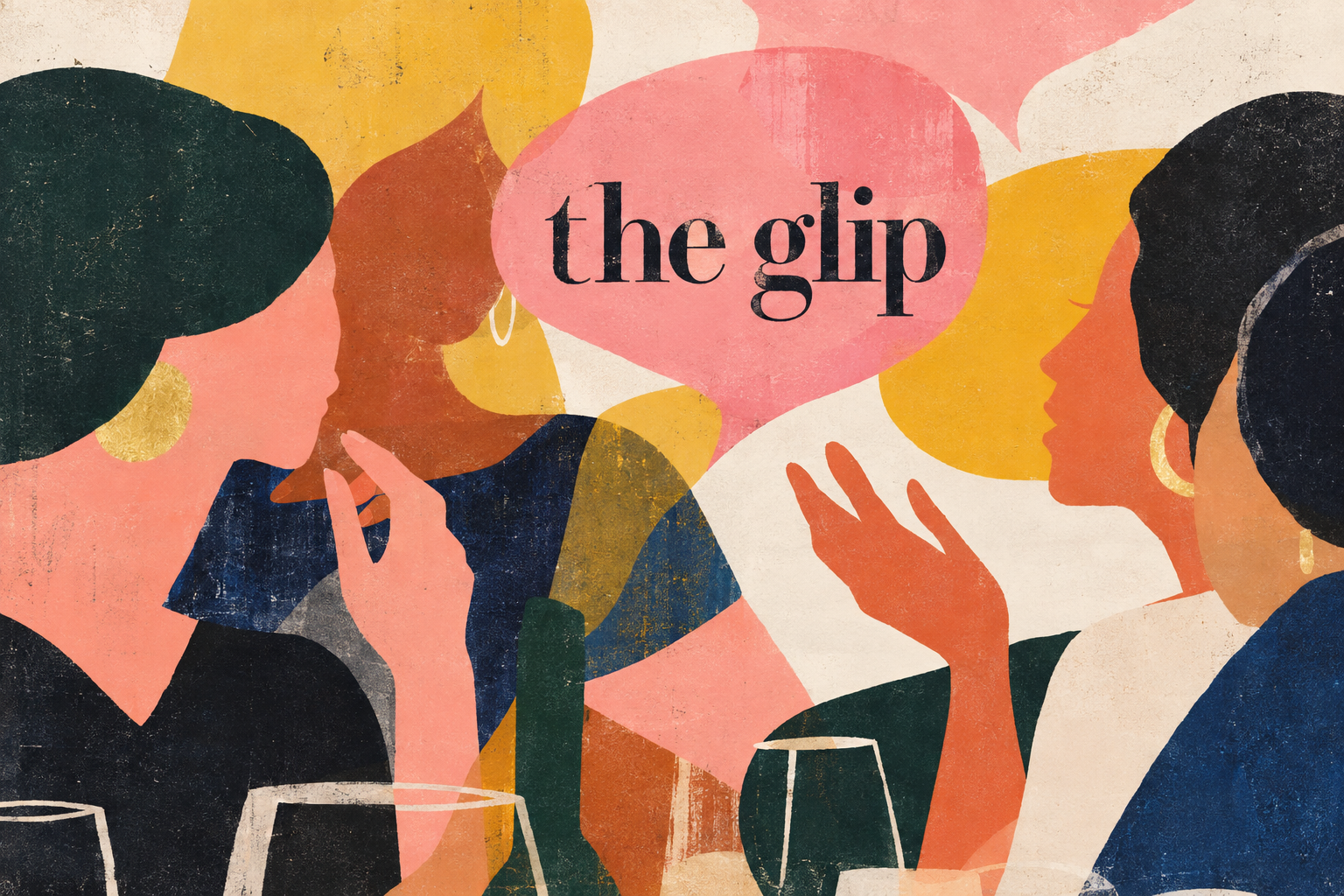
I was at dinner with friends recently when one woman turned to another and asked, very casually, “Are you on the glip? How’s it going?”
Within seconds, the table was talking about GLP-1s. Except I didn’t know that. I’d been out of the country for a while and eventually had to interrupt: Wait. What’s the glip?
What stuck with me wasn’t so much the conversation about the drug itself. It was the nickname.
GLP-1 is already shorthand, but it still sounds imported from the doctor’s office — a technical term built for a clinical setting. Here, “the glip” was doing something different.
First, there’s compression. “The glip” turns an acronym into a word — easier to say, easier to repeat, easier to circulate in conversation.
Then there’s shared understanding. Nicknames tend to emerge when a group no longer needs the full explanation. Saying “the glip” assumes a certain amount of cultural fluency: you know what I mean, I know what you mean, and we can move on. There’s a degree of insider knowledge embedded in the shorthand itself.
In this group, that shorthand had clearly taken on a life of its own. These women had been talking about their experiences often enough that “GLP-1” no longer served the conversation particularly well. Somewhere along the way, “the glip” emerged — half utility, half joke — and stuck.
And then there’s social permission. The nickname doesn’t just make the term easier to say; it changes the conditions of the conversation around it. It makes the subject feel less clinical, less loaded, easier to introduce, easier to compare notes on.
That’s what fascinated me. The nickname wasn’t simply a linguistic shortcut. It seemed to mark a shift in the social role of the thing itself.
A term that began in a clinical context was now circulating around a dinner table, between friends, as part of ordinary life — and the language had adapted to fit.
As things find new roles in our lives, the language around them adapts too.
And those vernacular shifts are useful signals. The language people invent for themselves can reveal when a category is changing faster than its formal language is. A clinical term becoming social shorthand suggests that the meaning, audience, and context around the category may already be expanding. “The glip” was the clue that the context had changed.